
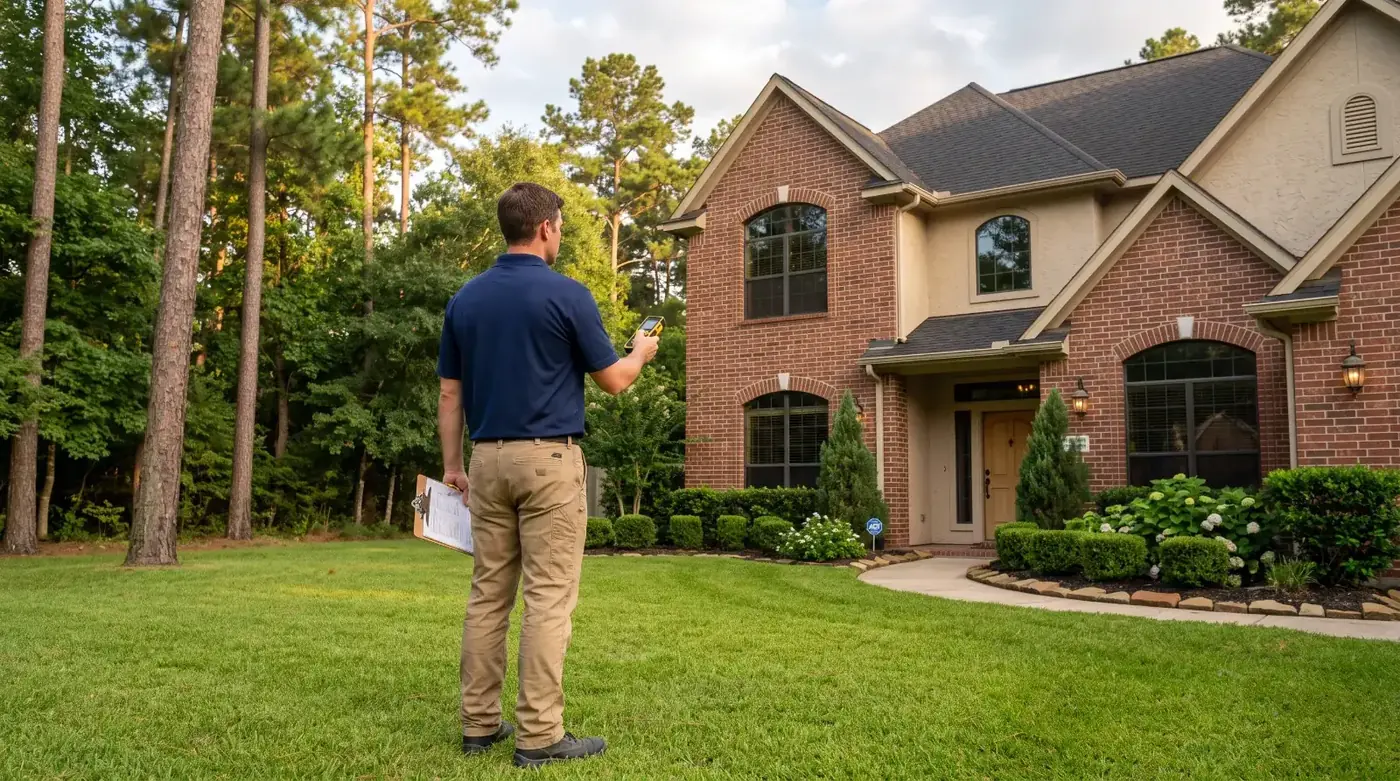
Most homeowners pay somewhere between $3,000 and $6,200 to have a typical two-story home exterior painted, and between $2 and $6 per square foot for interior painting, based on national cost guides. A single room usually runs about $400 to $1,600. Where your home lands in those ranges depends on its size and height, the surfaces, how much prep and repair it needs, and the paint you choose. The only way to know your exact number is a detailed, itemized estimate based on your actual home.
Typical price ranges at a glance
| Project | Typical range |
|---|---|
| Exterior, national average | About $3,177 ($1.50 to $4 per sq. ft.) |
| Exterior, one-story home | $1,500 to $3,500 |
| Exterior, two-story home | $3,000 to $6,200 |
| Exterior, brick | $3,500 to $10,000 ($1.50 to $4.50 per sq. ft.) |
| Exterior, stucco | $1,400 to $6,000 ($1.50 to $4 per sq. ft.) |
| Interior, per square foot | $2 to $6 |
| Interior, 2,500 sq. ft. home | $5,000 to $15,000 |
| One room | $400 to $1,600 (about $1,100 on average) |
| Kitchen cabinets | $2,500 to $6,500 (about $70 to $125 per door) |
| Ceilings | Add $1 to $3 per sq. ft. |
| Trim and baseboards | $1 to $3 per linear foot |
Ranges are general references from published cost guides, not quotes. Your price depends on your home, the scope, and the products you choose.
1. Size and height of the home
More square footage means more paint and more labor, but height matters just as much. Many homes are two stories, with tall entryways, high ceilings, and vaulted living rooms. Cost guides put a two-story exterior at up to about 50% more than a one-story home, because painting at that height takes ladders or scaffolding, more setup time, and extra care. Inside, a family room with 18-foot walls takes far more work than the floor plan alone suggests.
2. Prep and repairs
Prep decides how long a paint job lasts, and it is often the biggest difference between two quotes. Exterior prep can include pressure washing, scraping loose paint, replacing cracked caulk, sealing gaps, and repairing wood rot on trim, fascia, or siding. Interior prep can include patching nail holes and dings, repairing drywall, sanding glossy surfaces, and priming stains or dark colors. Textured or damaged walls can add up to 50% to an interior budget.
Older homes, especially those with original wood trim and siding, often need more of this work than newer builds. If an estimate seems low, check how much prep it actually includes.
3. The surfaces being painted
Different materials take different products and different amounts of work:
- Brick is one of the most expensive surfaces to paint, because it soaks up paint and needs a masonry primer or coating like Loxon XP.
- Stucco needs crack repair and a coating made for masonry.
- Fiber cement and wood siding need sound caulk lines and any damaged boards fixed first.
- Trim, doors, and shutters take more hand work than open wall areas.
- Cabinets cost more per square foot than walls, because every door and drawer is cleaned, sanded, primed, and finished.
4. Paint quality and color
Premium paint costs more per gallon, but it usually covers better, resists fading and mildew, and lasts longer, which matters most in hot, humid climates. Latex and acrylic latex paint usually runs about $20 to $50 per gallon. Common professional brands include Sherwin-Williams, Benjamin Moore, Behr, PPG, and Glidden, and a good painter recommends the right product line for each surface. Color can also change the scope: going from a dark color to a light one, or choosing a deep, bold shade, can mean a primer coat or an extra finish coat.
5. Detail and number of colors
A single wall color with white trim is simpler than a home with an accent wall, two trim colors, painted doors, and a contrasting ceiling. Each extra color means more cutting in, more masking, and more time. Accent walls alone can add 20% to 30% to a room’s budget.
6. Access, furniture, and landscaping
Tight side yards, steep rooflines, heavy landscaping, and rooms full of furniture all add setup time. A professional crew moves and covers furniture and protects floors and plants, and that time is part of the estimate.
Interior vs. exterior: what changes
Exterior projects are driven by height, surface type, and repairs, plus the weather, since good crews schedule around rain and high humidity. Interior projects are driven by the number of rooms, ceiling height, wall condition, and how much trim, door, and cabinet work you want. Many homeowners split the work, starting with the rooms they use most or the side of the house that takes the most sun.
How to compare painting estimates
When you have more than one quote, make sure you are comparing the same job:
- Is it written and itemized? You should see the areas, the prep, the number of coats, and the paint brand and line.
- What prep is included? Washing, caulking, wood rot repair, patching, and priming should be spelled out.
- Who is insured? Ask for proof of insurance before work starts.
- What warranty comes with it? Look for a written workmanship warranty and read what it covers.
- What is the payment schedule? Know when payments are due before you sign.
Questions homeowners ask about painting costs
How much does it cost to paint a two-story house exterior?
National cost guides put most two-story exteriors between $3,000 and $6,200. Brick, large homes, and homes that need a lot of repair can run higher.
How much does it cost to paint one room?
Most homeowners pay about $400 to $1,600 to have one room painted, with an average near $1,100. High ceilings, ceilings and trim, or rough walls push the price higher.
How much does it cost to paint kitchen cabinets?
Most professional cabinet painting jobs fall between $2,500 and $6,500, or roughly $70 to $125 per door. That is usually less than replacing them.
Why are painting quotes so different from each other?
Most of the difference comes from prep, paint quality, and how many coats are included. A lower quote often leaves out repairs or uses a cheaper paint line, which can mean repainting sooner.
Are painting estimates free?
Most local painting contractors offer free estimates. A good one visits your home, talks through what you want, and sends a detailed, itemized written estimate.
Can I finance a paint job?
Often, yes. Many painting contractors offer financing through third-party lenders for qualified customers, so ask about it when you request estimates.
Do painting prices vary by location?
Yes. Labor rates and demand change from one region to another, so local quotes can sit above or below national averages. The factors that drive the price stay the same everywhere: size, height, prep, surfaces, and paint. Get written estimates from painters who work in your area to see real local prices.